Physical vs. Psychological Work Injuries: What’s the Difference?
WorkCover Hub Team3 min read
Workplace injuries don’t always involve broken bones or visible wounds. In fact, psychological injuries are becoming increasingly recognised as serious work-related health concerns. Understanding the difference between physical and psychological work injuries is crucial for both employers and employees to ensure proper support, treatment, and compensation.
While physical injuries are often linked to specific incidents, psychological injuries may accumulate over time due to ongoing workplace stressors.
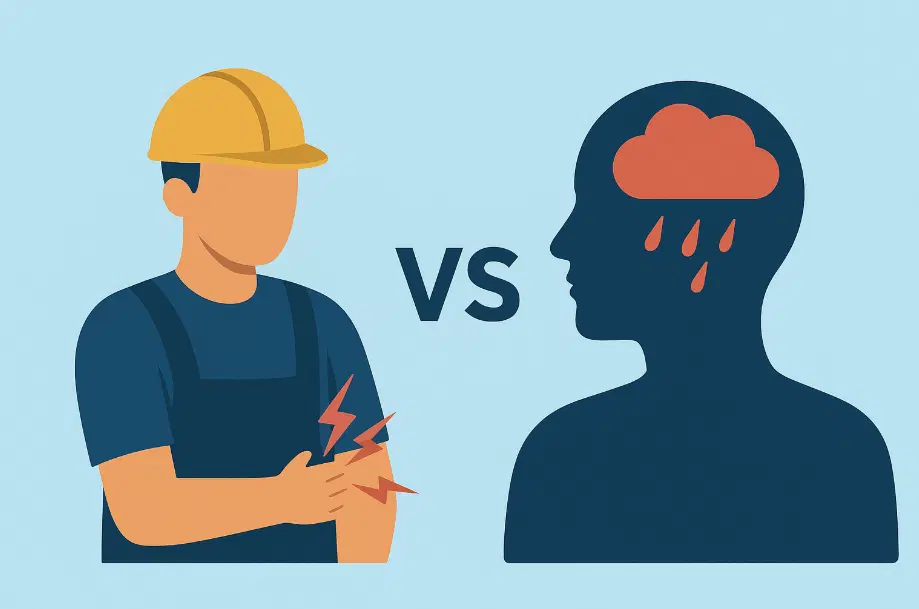
Physical vs. Psychological Work Injuries
Let’s explore in detail how physical and psychological work injuries differ, and why understanding both is vital for a safer, healthier workplace.What Are Physical Work Injuries?
Physical injuries are the most visible type of workplace injury and usually result from an accident, repetitive movement, or unsafe conditions. Common examples include:- Slips, trips, and falls
- Back or neck strains from lifting heavy objects
- Cuts, burns, or fractures
- Repetitive strain injuries (RSI) from prolonged computer use or manual labor
What Are Psychological Work Injuries?
Psychological injuries involve mental or emotional harm caused or worsened by workplace conditions. These injuries may develop over time and can be just as debilitating as physical injuries. Examples include:- Stress and anxiety from workload or workplace conflict
- Post-traumatic stress disorder (PTSD) from a workplace accident
- Depression caused by bullying, harassment, or traumatic incidents
- Burnout from excessive work demands
Causes of Physical vs. Psychological Injuries
| Type | Common Causes |
| Physical | Slips, falls, lifting heavy objects, repetitive strain, machinery accidents |
| Psychological | Bullying, harassment, high-pressure deadlines, traumatic events, workplace isolation |
Recognising the Symptoms
Physical injury symptoms:- Pain, swelling, or bruising
- Limited mobility or function
- Visible wounds or deformities
- Persistent anxiety or irritability
- Difficulty concentrating or making decisions
- Sleep disturbances
- Withdrawal from colleagues or workplace activities
Reporting and Compensation
Both physical and psychological work injuries are covered under workers’ compensation schemes in Australia if they are work-related.- Physical injuries: Usually straightforward to report with medical certificates and incident documentation.
- Psychological injuries: Require detailed evidence, such as medical assessments by psychologists or psychiatrists, and documentation linking the condition to work-related factors.
Supporting Employees During Recovery
Regardless of injury type, employers can support recovery by:- Providing medical or psychological treatment
- Implementing return-to-work plans with modified duties
- Offering counselling or Employee Assistance Programs (EAPs)
- Maintaining open communication and empathy
Key takeaways
- Physical injuries are visible and often linked to specific incidents.
- Psychological injuries involve mental health issues and may develop over time due to workplace stress.
- Both types of injuries are covered under workers’ compensation, but documentation and evidence differ.
- Early recognition, reporting, and proper employer support are essential for effective recovery.