Working With Organisations Across WorkCover & CTP
No one should get hurt at work and not know what comes next. WorkCover Hub works with the organisations that stand in front of Australian workers — general practices, medical centres, allied health teams and unions — to close the knowledge gap that costs injured workers their claims. WorkCover Hub works inside these schemes every day — clinically and administratively — and the point of working with us is that your people will know them too.
Start a conversation
The Scheme Is Only as Fair as People's Understanding of It
Workers compensation in NSW is, on paper, a generous system: treatment paid for, wages supported, recovery planned. In practice, its outcomes depend on knowledge that most workers are never given. A certificate lodged late, a notification missed, a form completed incorrectly — claims are lost on procedure far more often than on merit, and the people who pay for that are the ones the system was built to protect.
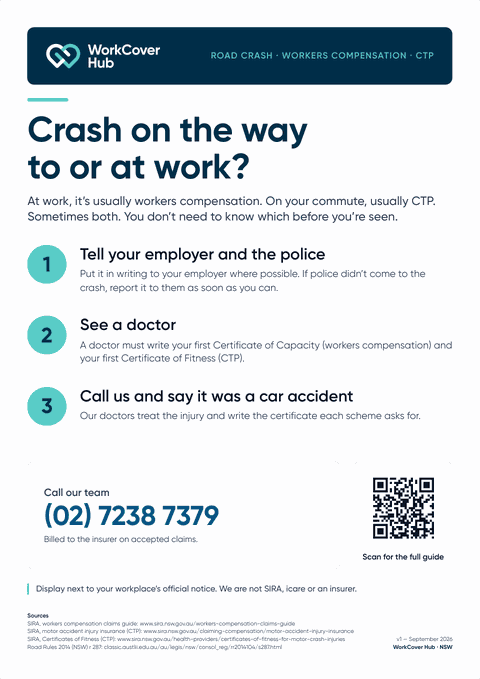
The complexity is structural, not accidental. A single injury can sit at the intersection of statutory timeframes, certificate rules, insurer processes and, where a vehicle is involved, an entirely separate compensation scheme. Official guidance exists, but it is written for the people who administer the system. The worker at the kitchen table, the receptionist at the front desk and the delegate on the floor need it translated — accurately, and by someone with no stake in the answer coming out one way or the other.
We see the downstream cost of that knowledge gap every day in the clinic: injuries that became disputes, disputes that became months of lost income, and workers who tell us they simply did not know what they were entitled to or what the next step was. Treating the injury is our profession. Closing the gap that made it harder than it needed to be is, we think, part of the same responsibility.
WorkCover Hub works inside WorkCover and CTP end to end — our doctors and allied health team on the clinical side, and alongside them the people who manage certificates, approvals and insurer correspondence as their daily work. Working knowledge of that depth is rare outside the insurers and the regulators, and it is more useful shared than held. When the people around a worker understand how the system operates, the system itself behaves better: treatment starts earlier, avoidable disputes never begin, and people get back to work sooner. Every participant in the scheme is better off for it.
So we make our expertise available beyond the clinic. Not as a product, and not on a template — every industry carries its own risks, its own workforce and its own questions, and an organisation that supports workers knows its people better than we ever will. What we bring is deep working knowledge of WorkCover and CTP, and a willingness to put it wherever it helps.
And the aim is not that organisations come to depend on us — it is that they do not have to. A practice that runs its workers compensation files efficiently gets its hours back; a delegate who knows the first steps protects a member before we ever meet them. That efficiency serves the organisation, but it is not the point. The point is what it produces: claims that move the way they should, for the person they belong to. Better for the patient is the outcome everything else on this page serves — for us, and for every organisation we work with.
Collaboration Takes the Shape Your Organisation Needs
For some organisations it is clinical education — workshops with practice teams and allied health groups on how the schemes operate. For unions it is seminars with members and delegates. For work sites it is short sessions built around the site's own schedule. For others it is simply a reliable place to send a hard question.
We do not arrive with a fixed program. The conversation starts with your organisation's people and what they face, and the shape of the work follows from there — a single session, an ongoing arrangement, or nothing more than an answered question. Each industry has a different need, and we aim to help where we can.
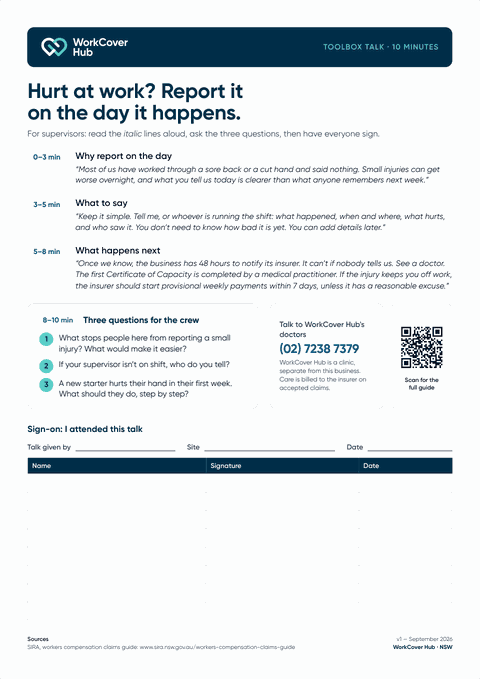
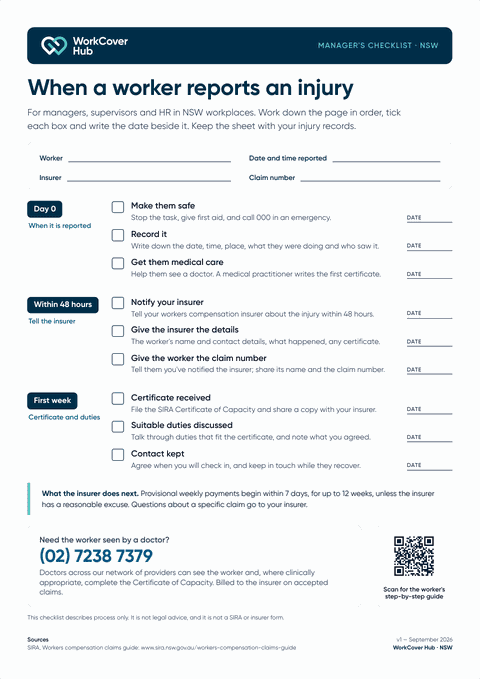
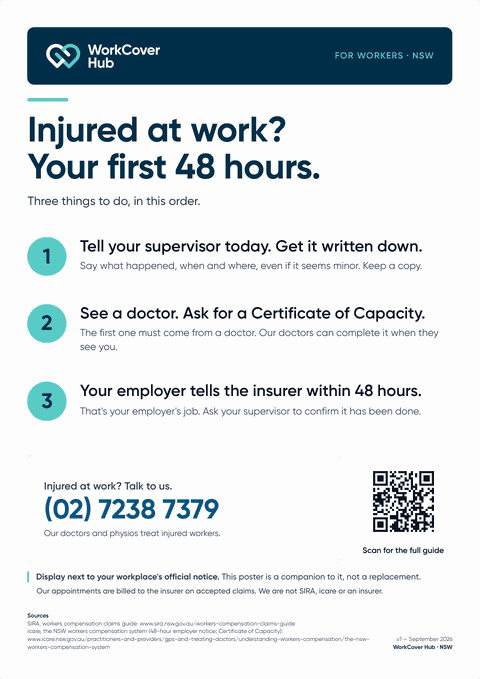
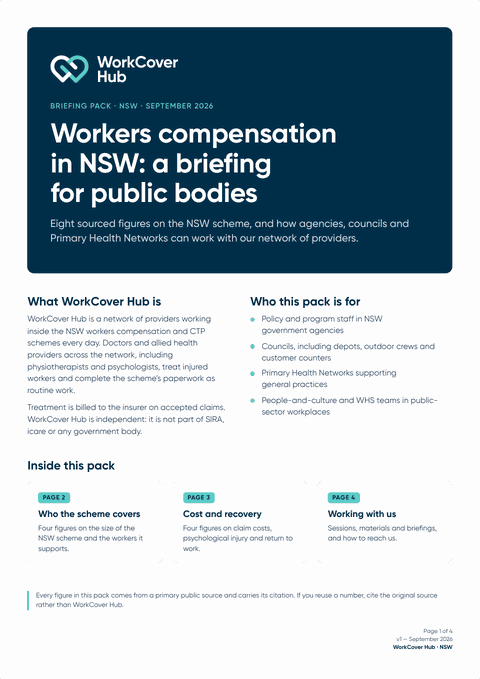
Recent formats include practice workshops on WorkCover and CTP, union branch seminars, and on-site toolbox talks.

The Organisations Workers Already Trust
Injured workers rarely start with a clinic. They start with their GP, their practice, their treating team or their union — so that is where the knowledge belongs.
General practice
For GPs and registrars
The schemes ask a great deal of treating doctors and explain very little. We work through how WorkCover and CTP actually operate — certificates, billing, disputes — with the doctors who carry that load. More for treating GPs, including a direct line for clinical questions, is on our health professionals page.
Medical centres
For practice teams
Reception, nursing and practice management all touch a workers compensation file, and each sees a different part of it. We help practice teams run workers compensation efficiently in their own right — what the schemes ask, how certificates and billing flow, how to keep a file moving. The hours saved matter; the patient whose claim moves properly matters more.
Allied health
For treating teams
For physiotherapy, psychology and exercise physiology teams: how treatment approval operates in NSW, what the certificate rules mean for allied health practitioners, and how clinical documentation supports a patient's claim rather than complicating it.
Unions
For members and delegates
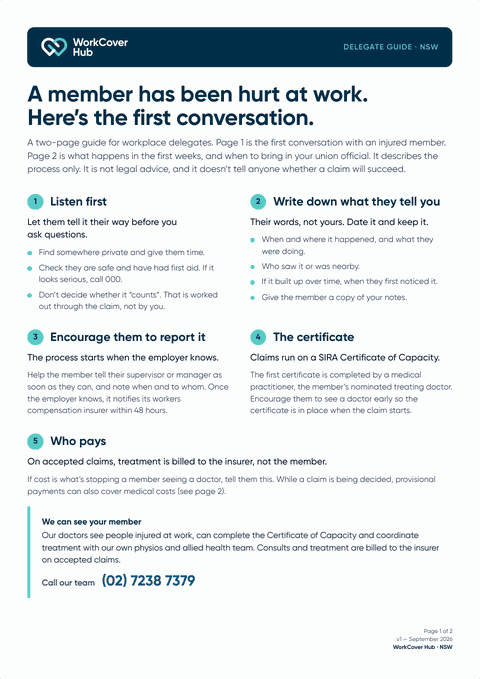
The delegate is often the first person an injured member speaks to. We work with unions to put practical knowledge in the room before it is needed — what the scheme provides, the first steps after an injury, and the procedural mistakes that cost members their claims.
Questions Organisations Ask Us
If yours isn't answered here, reach out — answering it is the point of this page.
Questions About WorkCover or CTP? Reach Out.
Start a conversation about your organisation's people — or just ask the question they're stuck on. Either way, it will be answered by people who work inside these schemes every day.
Call (02) 7238 7379